
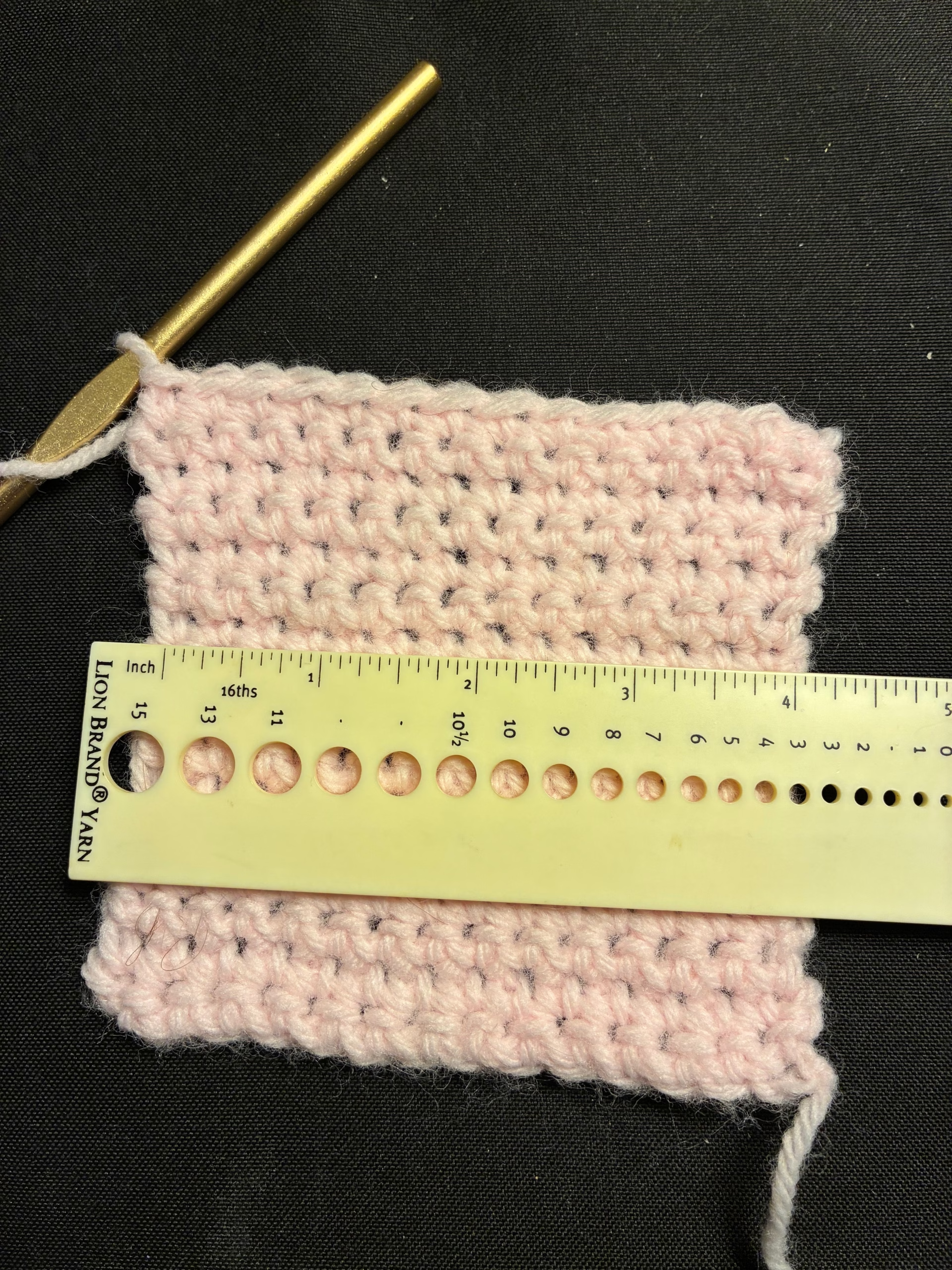
Understanding and testing the gauge is crucial for the correct sizing in any wearable knitting or crochet project. Simply put, gauge is the number of stitches per inch/centimeters across the row and the number of rows per inch/centimeters vertically.
Gauge is commonly measured in 4-inch/10-centimeter squares.
For example, a pattern may specify Needle Size 8, 15 stitches by 32 rows = 4” x 4” / 10 cm x 10 cm square. This means that by knitting with a needle size 8, casting on 15 stitches, and knitting 32 rows, you should finish with a 4” x 4”/10 cm x 10 cm square. But here is the catch! Everyone knits slightly differently, with slightly different tension, so while the standard gauge for this project is a size 8 needle, 15 stitches across, and 32 rows to make a 4” x 4”/ 10 cm X 10 cm square, you may find your square slightly larger or smaller than the given gauge.
What to do?
This is where testing more than once is important, and that means testing with different knitting needles or hooks depending on your project. You never change the stitch count in a test gauge swatch; you only alter the hook or needle size to create a square that matches the correct measurements in the given gauge pattern. For example, if my test swatch with size 8 needles works up to a 4.5” x 4.5” square, that means the needle size recommended is working up too large for my specific tension with the yarn. Therefore, I need to downsize my needle to a size 7, retest the gauge swatch by making a new swatch with 15 sts, and knit 32 rows to see if it creates a 4” x 4”/ 10 cm x 10 cm square.
If your gauge swatch is smaller than desired when using the recommended hook or needles, you must re-knit it with a larger-sized hook or needles. For example, if you use size 8 needles, knit 15 stitches by 32 rows, and produce a 3.5” x 3.5” square instead of the required 4” x 4” square, switch to size 9 needles and re-knit the swatch to check if it reaches the correct 4” x 4” (10 cm x 10 cm) gauge.
So it follows:
If the swatch is too large, remake it with a smaller hook or needle.
If the swatch is too small, remake it with a larger hook/ needle.
The goal is to arrive as close as possible to the required gauge swatch size using the same stitch and row count in the gauge pattern.
Let’s Practice:
Yarn Size Medium 4
Knit Swatch: Needle size 8 (5mm), 15 sts, 32 rows in garter stitch = 4” x 4”/ 10 cm x 10 cm
Garter Stitch = knit stitch every row
Following this pattern, we need to:
1. Cast on 15 stitches
2. Knit 32 rows, using the knit stitch every row.
3. Bind off & measure. You should have a 4”/10cm square.
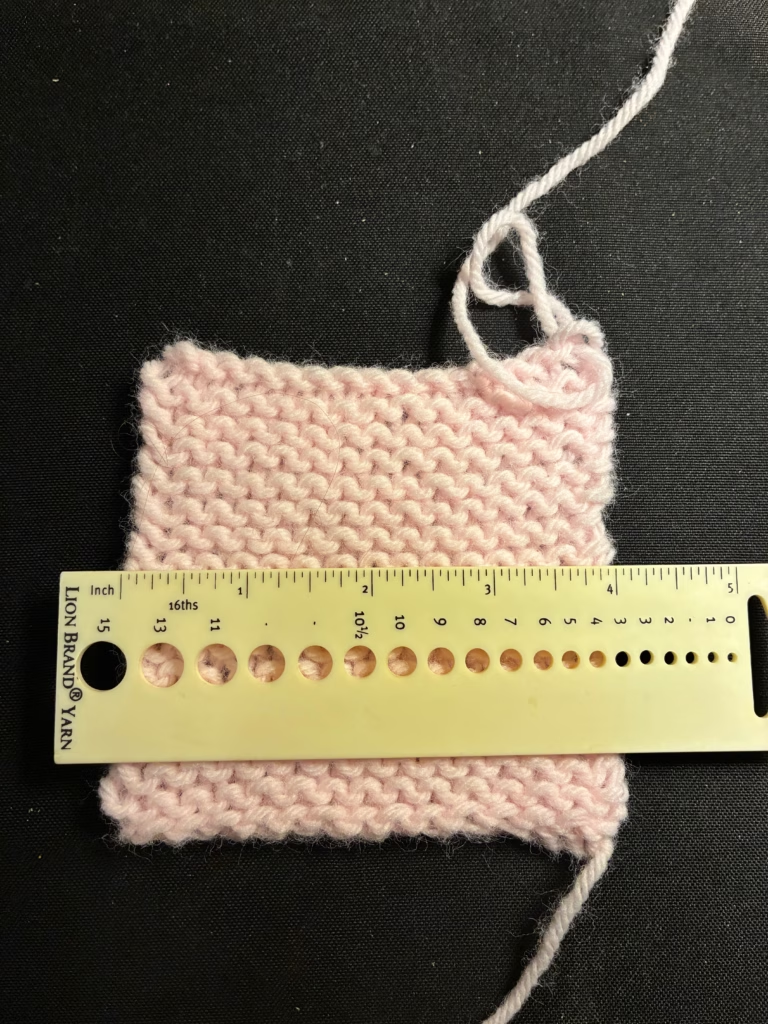
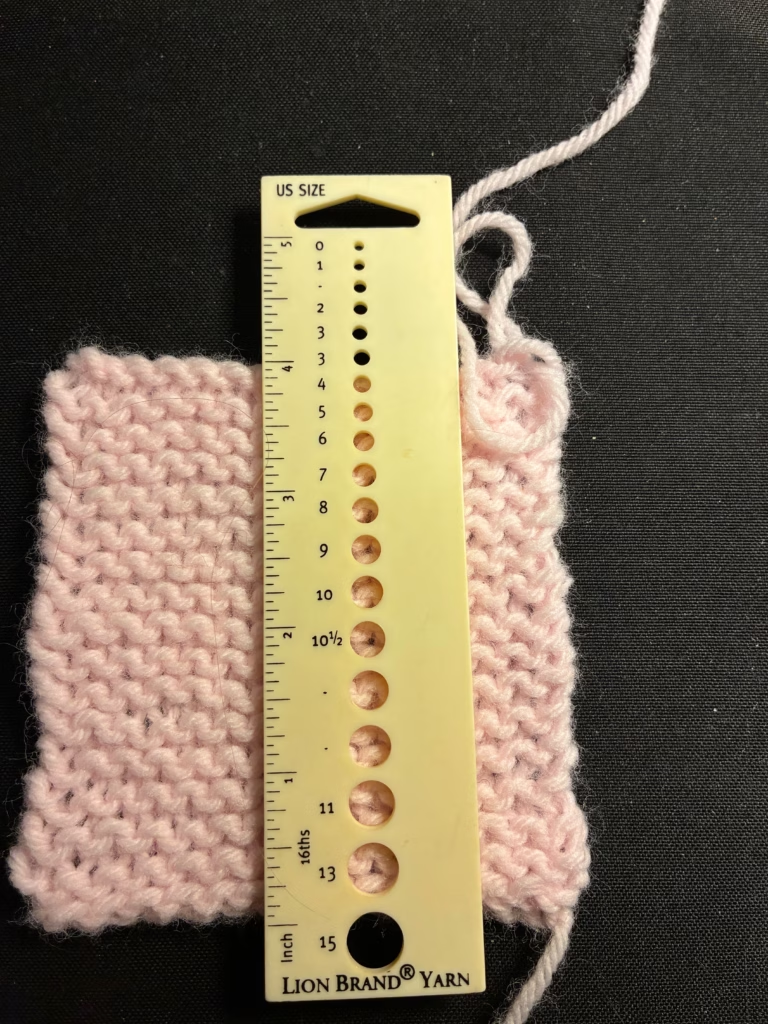
Using the same yarn & size, let’s try this swatch pattern.
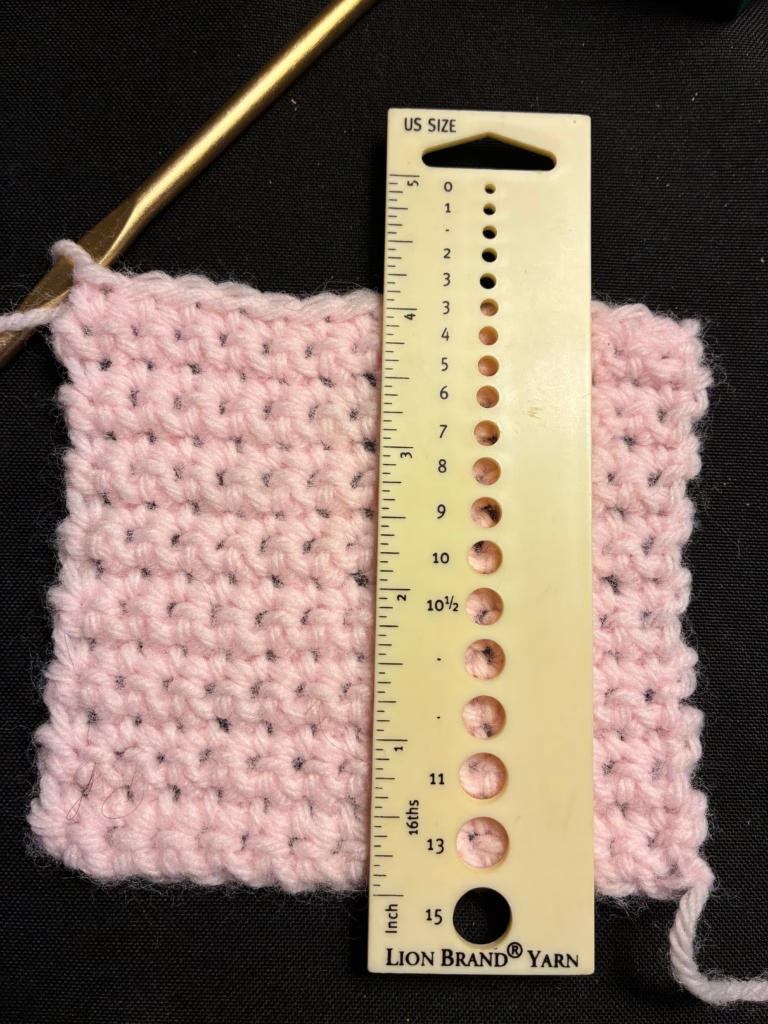
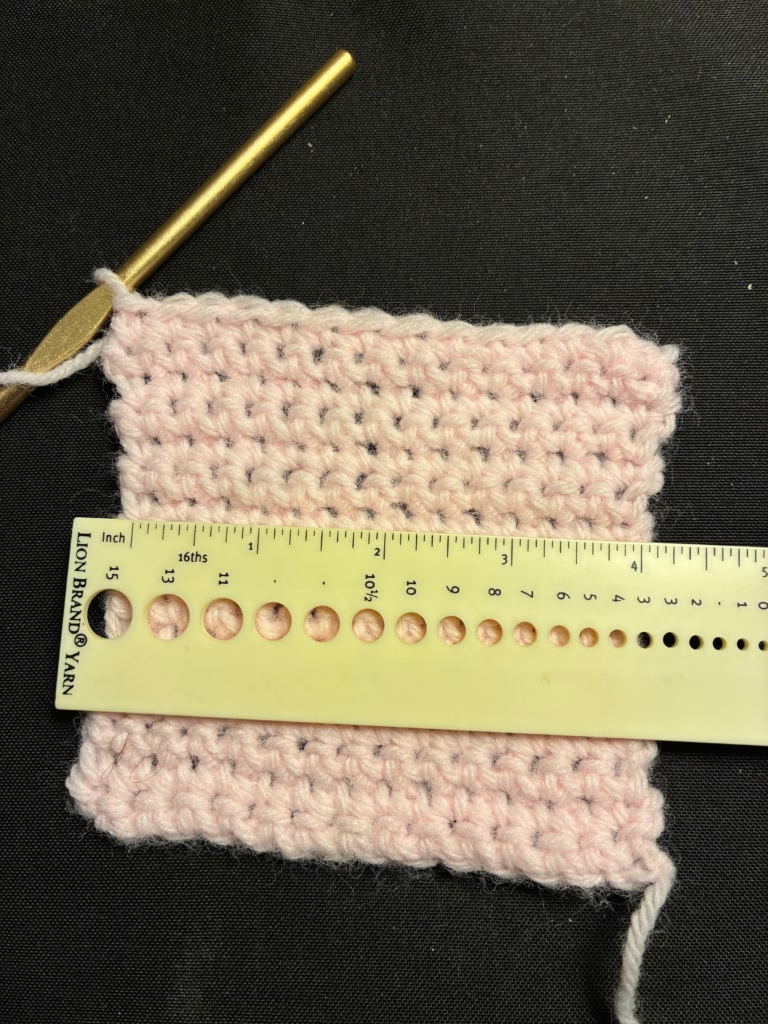
Crochet Swatch: Hook size J-10 (6mm), 14 sts/16 rows in single crochet = 4” x 4”/ 10 cm x 10 cm
1. Chain 15 sts. (14 sts + 1 for turning chain.)
2. Single crochet in the second chain from the hook & each chain across. Chain 1 for turning the chain. (14 single crochet.) This is your row 1.
3. Repeat step 2 for an additional 15 rows.
4. Fasten off & measure. You should have a 4”/10cm square.
Remember, in either situation, if the square is too large, you need to:
Re-knit or re-crochet the square with a smaller hook or needles.
If the square is too small, you need to:
Re-knit or re-crochet the square with a larger hook or needles.
Repeat this process until you get the crochet hook or knitting needles that produce the correct square size.
A few things to remember:
1. Gauge swatches will normally be written in the main stitch used throughout the pattern. That means a pattern done mostly in single crochet will use single crochet in the gauge swatch. A pattern worked in knit stockinette stitch will use knit stockinette in the gauge swatch.
2. Never change the stitch count or row count in the gauge swatch pattern; only change the hook or needle size to get the correct square size for the way the pattern is written.
3. Gauge is important for most wearable articles. Testing the gauge for items such as sweaters, hats, and mittens will ensure that your project has the same measurements as listed in the pattern.
4. Some patterns will say ‘gauge not important,’ and in this situation, it is not crucial to test a gauge swatch. This is normally for items that are not worn or sized, such as dishcloths, sometimes scarves, or toy patterns.